Off-grid project sites across Orange County frequently lack utility tie-ins during early civil works, making solar-powered units an operational necessity. For multi-week developments along Lake Nona Boulevard or infill…
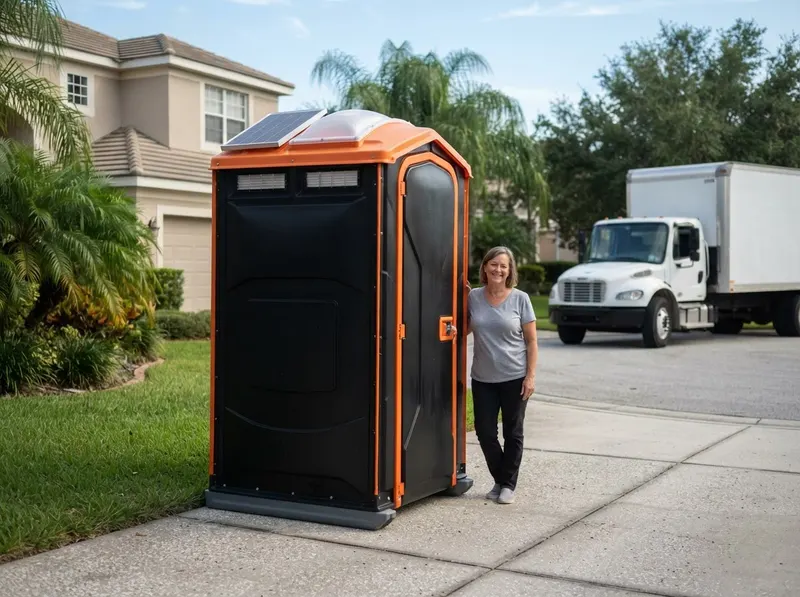
Off-grid project sites across Orange County frequently lack utility tie-ins during early civil works, making solar-powered units an operational necessity. For multi-week developments along Lake Nona Boulevard or infill custom builds in College Park, running temporary electrical cables across access corridors creates safety hazards and fails OSHA jobsite inspections under 29 CFR 1926.51. A solar-powered self-contained restroom operates entirely independent of the grid. It pairs a sealed 60-gallon to 100-gallon waste holding tank with an integrated 12-volt solar charging circuit that powers both nighttime task lighting and an active ventilation blower. This exhaust system runs continuously to pull rising thermal odors out through the roof vent pipe, preventing the rapid bacterial gas buildup common in Florida's 90-degree summer humidity.
Choosing a solar-powered self-contained unit over a standard chemical cabana comes down to utility access versus capital expense. Standard units rely on passive louver vents and translucent roof panels, which limit visibility during dawn pours or night shifts and trap heat when ambient temperatures climb. The solar alternative incorporates sealed deep-cycle marine batteries capable of holding a 72-hour operating reserve during extended overcast afternoons or tropical afternoon downpours common near Tinker Field and Camping World Stadium. While standard chemical units carry a lower baseline rental cost, the solar-powered self-contained option eliminates the separate rental, fuel, and fire-risk compliance costs of portable generator linkups for after-dark operations. If a crew mobilizes before municipal power arrives, the integrated solar setup keeps the station functional without ongoing maintenance headaches.
Placement logistics require planning around local site conditions. In tight residential easements throughout Thornton Park, Delaney Park, and Lake Eola Heights, overhead live oak canopies can limit direct sun exposure. Delivery drivers evaluate branch clearance and sun angles to position the solar panel facing south or southwest while maintaining clear pump-truck hose access within 25 feet. For projects in paved commercial hubs like the SODO District or high-traffic event perimeters near Dr. Phillips Center for the Performing Arts, units are set level on asphalt using composite stabilizing pads that protect paved surfaces from point-load damage. The entire system is anchored to withstand Central Florida afternoon wind gusts, keeping your site sanitary and compliant through every phase of construction.
Every job gets a firm, written price after a free on-site visit.
Tell us about your solar-powered self-contained restroom job in Orlando and we'll send a clear, written quote, usually the same day.
 Bison Portable Toilets