Multi-story construction across the SODO District and commercial corridors in Lake Nona requires dedicated upper-floor sanitation to eliminate lost transit hours. Standard ground-level chemical toilets force framing…
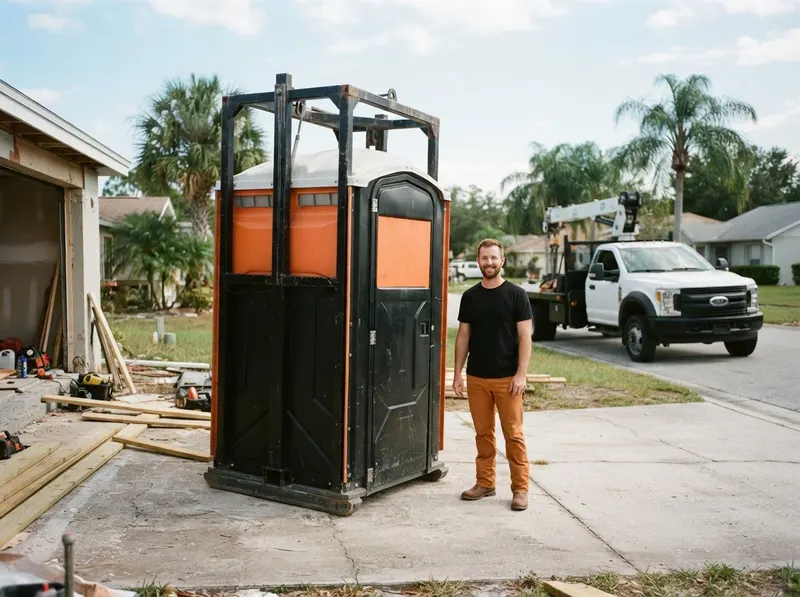
Multi-story construction across the SODO District and commercial corridors in Lake Nona requires dedicated upper-floor sanitation to eliminate lost transit hours. Standard ground-level chemical toilets force framing and mechanical crews to wait on construction hoists or descend exterior stair towers, burning up to 45 minutes per worker each day. A crane-lift portable unit integrates a heavy-gauge structural steel frame with engineered, proof-tested top lift eyes. Tower cranes or mobile rigs hoist the unit directly onto active floor plates as concrete pours progress, positioning essential facilities within 100 feet of framing crews. Industrial-grade, non-marking swivel casters allow two laborers to push the unit across cured concrete decks, rolling through framed openings before crane hookups hoist it to the next deck elevation. The operational trade-off centers on deck staging: placing a 350-pound empty unit on an elevated slab demands coordinated floor-load management and proximity to construction hoists for vacuum service hoses.
Servicing an elevated sanitation unit requires clear job-site logistics tailored to Central Florida weather. Under the intense heat common to Orange County from May through October, interior tank temperatures escalate quickly, accelerating odor production. Units dispatched to multi-story jobs in MetroWest and urban infill sites near College Park and Delaney Park receive high-potency summer biocides and scheduled morning pump-outs. General contractors maintain crane access windows or external hoist availability so service trucks can drop heavy-duty extraction lines directly to the floor plate, or crane the unit down to street level during weekly service rotations. High-rise mobile units differ strictly from standard roll-around ground units: standard units lack proof-tested structural lifting slings and cannot legally or safely be rigged to an overhead crane hook under OSHA 1926 subpart N crane and rigging regulations.
Securing upper-deck units against afternoon thunderstorm downdrafts is essential for elevated sites in Baldwin Park and downtown Orlando. Crane-rated lifting frames feature integrated anchor points that allow site crews to tie units off to structural columns, concrete drop-in anchors, or post-tension slab shores when 40-plus mph wind gusts threaten unsecured equipment. 1. Review project deck elevations and hoist schedules with site superintendents. 2. Verify ground crane access and clear staging lanes off delivery corridors like Orange Avenue or Interstate 4. 3. Dispatch the steel-caged unit directly to the hoist pad, where site riggers connect four-part spreader bridles for vertical transport. 4. Coordinate recurring pump-out times to align with material hoist windows, preventing site bottlenecks and keeping framing crews fully productive.
Every job gets a firm, written price after a free on-site visit.
Tell us about your high-rise crane-lift mobile toilet job in Orlando and we'll send a clear, written quote, usually the same day.
 Bison Portable Toilets